Scaffold a Laravel project
specsnl/specs-laravel-project is a real
template that exercises most of what Specs can do: eleven prompts, nine computed values, conditional
files, a verbatim escape, custom delimiters, and four post-use hooks. This page runs it end to
end — from an empty directory to a Laravel app in the browser — and then registers it so the second
project costs one command.
Each step links to the reference page that owns the detail, rather than repeating it here.
1. Prerequisites
- Docker — OrbStack on macOS. The generated project runs its whole stack in containers, and the template’s hooks use Docker too.
- Task — the generated project’s entrypoint for everything.
- Homebrew — how this page installs
specs. The Installation page covers the other routes.
2. Install specs
brew install specsnl/tap/specs
specs --version
To try an unreleased build first, specs@rc is a separate cask that follows every tag —
see Installation.
3. Scaffold the project
specs use specsnl/specs-laravel-project ./acme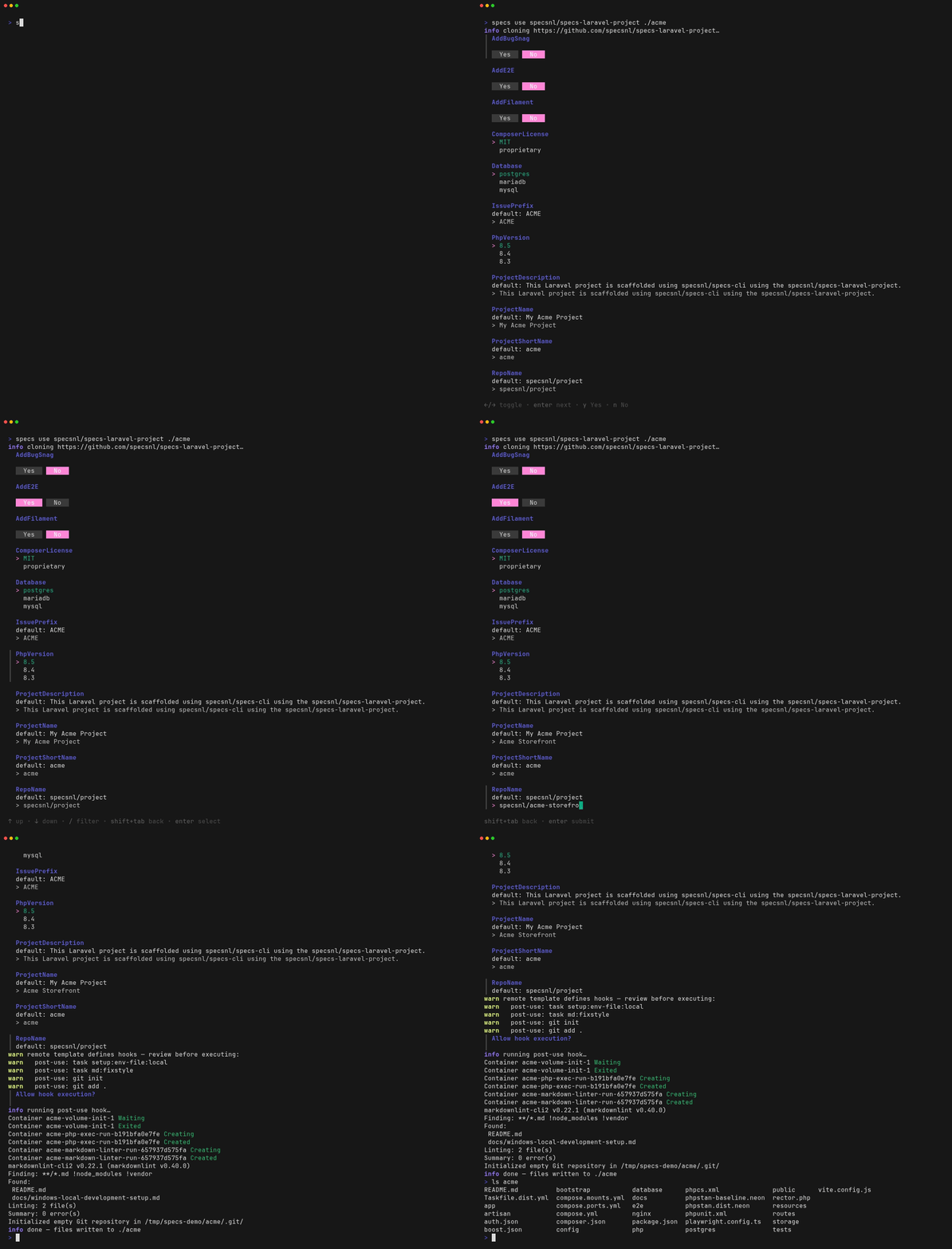
specs use fetches, renders and discards: nothing is registered, and the only thing left behind is
./acme. Bare owner/repo is shorthand for a GitHub repository; the github:specsnl/… form the
template’s own README still uses means the same thing.
The template is remote and it defines hooks, so before running them specs prints the commands and
asks. That prompt is not a formality — see
Hooks run other people’s code.
4. The prompts
Eleven fields, asked as one form in alphabetical order. The answers in the third column are the ones this page uses; everything after here assumes them.
| Prompt | Type | Answered with | What it controls |
|---|---|---|---|
AddBugSnag | confirm | No | Bugsnag in composer.json, bootstrap/ and config/logging.php |
AddE2E | confirm | Yes | e2e/, playwright.config.ts and the e2e taskfile |
AddFilament | confirm | No | Filament in composer.json, bootstrap/providers.php and User |
ComposerLicense | select | MIT | license in composer.json |
Database | select | postgres | The database service, its directory, and six computed values |
IssuePrefix | text | ACME | The PR title pattern in .github/workflows/pr-title-checker.yml |
PhpVersion | select | 8.5 | The PHP image tag, composer.json and the CI PHP setup |
ProjectDescription | text | the default | README.md and composer.json |
ProjectName | text | Acme Storefront | APP_NAME, the README title, package.json |
ProjectShortName | text | acme | COMPOSE_PROJECT_NAME, the database name, the OrbStack domains |
RepoName | text | specsnl/acme-storefront | composer.json name and the GitHub rulesets |
The type decides the widget: a string prompts for text, a bool for yes/no, a list for a choice of its items. The project file covers the mapping.
5. What those answers changed
This is where the template stops being a file copy.
Two answers became nine values. Database: postgres and ProjectShortName: acme fan out
through the computed block into the generated .env:
DB_CONNECTION="pgsql"
DB_HOST="postgres"
DB_PORT="5432"
DB_DATABASE="${POSTGRES_DB}"   # POSTGRES_DB="acme" — ProjectShortName through toSnakeCase
DbOrbStackDomain becomes db.acme.local in the README’s service table, and PhpVersion: 8.5
selects Php85DockerTag, which is why compose.yml pins
ghcr.io/specsnl/php85/builder_nodejs:0.5.7. None of these were prompted for.
See Computed values.
Answering Yes to AddE2E wrote three paths that otherwise would not exist. The template names
them with the condition in the filename:
template/[[ if .AddE2E ]]e2e[[ end ]]/example.spec.ts
template/[[ if .AddE2E ]]playwright.config.ts[[ end ]]
template/.taskfiles/[[ if .AddE2E ]]Taskfile.e2e.yml[[ end ]]
A name that renders empty is skipped along with everything under it. The same trick gives the
database its directory — postgres/ is present, mysql/ and mariadb/ were never written. See
Template engine.
[[ … ]], not {{ … }}. A Laravel project is full of Blade and JavaScript that
already uses braces, so the template sets __delimiters in its project.yml and takes the braces
back. Everything above reads the same, only the fence changed. See
Template delimiters.
One filename is an expression that evaluates to a constant. The project’s .gitignore is
shipped as template/[[`.gitignore`]] — backticks are a raw string in Go template syntax, so the
name renders to exactly .gitignore, and the file is only a live ignore file once it lands in your
project rather than in the template’s own checkout. Same mechanism as the conditional filenames
above, with nothing conditional about it.
The four post-use hooks did the setup you would otherwise do by hand. They wrote .env from
.env.example, formatted the markdown, and left ./acme as a git repository with everything
staged — so the first commit is yours, not the template’s.
6. Boot it
Everything from here is the generated project’s own tooling; specs is done.
cd acme
task up
The first run builds the images, installs the Composer and npm dependencies, generates the app key, runs the migrations and builds the assets, so it takes a while. Afterwards:
| Service | With OrbStack | Without OrbStack |
|---|---|---|
| Application | https://acme.local | http://localhost:8080 |
| Mailpit | https://mail.acme.local | http://localhost:8025 |
| PostgreSQL | db.acme.local | localhost:5432 |
| Redis | redis.acme.local | localhost:6379 |
The host ports are only published when OrbStack is not the active Docker context — with OrbStack the
*.local domains are the way in. Open the application URL and the page title is Acme Storefront,
which is ProjectName arriving in APP_NAME.
task --list shows the rest; task stop keeps the state, task down discards it.
7. Reuse it from the registry
specs use discards the template each time. For a template you will reach for again, register it
once:
specs template download specsnl/specs-laravel-project laravel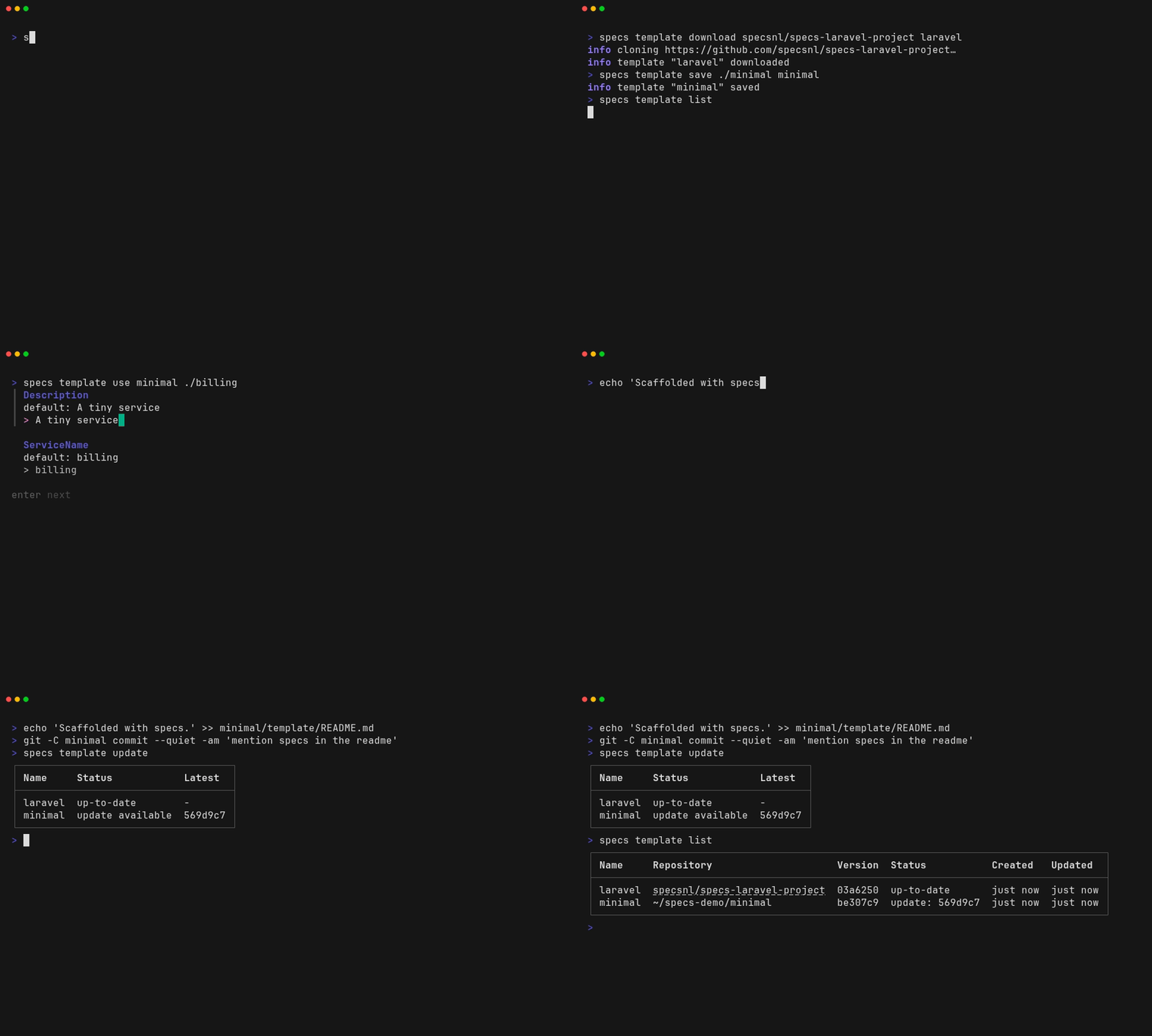
From then on the name is the source, and the prompts are identical:
specs template use laravel ./second-projectspecs template list shows what is registered and whether each entry has moved behind its remote:
┌─────────────────────────────────────────────────────────────────────────────────┐
│ Name     Repository                     Version  Status      Created   Updated  │
├─────────────────────────────────────────────────────────────────────────────────┤
│ laravel  specsnl/specs-laravel-project  03a6250  up-to-date  just now  just now │
└─────────────────────────────────────────────────────────────────────────────────┘
specs template update re-checks that status against the remote, and specs template upgrade pulls
the newer commit down. Where the files live is on the Storage page.